I watched a guy at the car wash yesterday spend twenty minutes aggressively power-washing the undercarriage of his rust-bucket 2004 Chevy Malibu. He thought he was saving it from the winter salt. Instead, half his rotted rocker panel washed straight down the floor drain, leaving a gaping hole of regret. People absolutely love applying brute force to problems that actually require structural intervention and planning.
Which brings me to the absolute comedy of errors passing for civil engineering on commercial site plans lately.
Developers want to pave five acres of prime Fox Valley farmland. They want maximum retail frontage and massive parking lots. Then they draw a tiny, perfectly rectangular puddle in the back corner of the CAD file, label it a “detention basin,” and expect it to magically prevent stormwater runoff during a massive spring thaw. Water does not care about your spreadsheet. Water is heavy, relentless, and when it hits frozen Wisconsin clay, it acts exactly like a concrete slip-and-slide.
If you want to actually get a commercial site approved and built, you have to acknowledge physical reality.
The Brutal Reality of Trying to Prevent Stormwater Runoff
You cannot bully a local plan commission into ignoring hydrology. The Wisconsin DNR enforces Chapter NR 151, which establishes strict, unforgiving performance standards for site drainage. They demand severe reductions in total suspended solids and strictly regulated peak discharge rates to align with the federal EPA NPDES Stormwater Program. Municipalities are legally on the hook if your muddy site washes out the local trout stream, so city engineers are going to scrutinize your grading plan down to the millimeter.
If developers think ignoring early geotechnical soil borings will speed up their approval schedule, there setting themselves up for a massive construction delay.
A junior draftsperson sitting in a climate-controlled cubicle can make any drainage model work on a computer screen. They plug standard runoff coefficients into the software and assume the ground will absorb the impact. The ground up here is not a sponge. In eastern and central Wisconsin, you frequently hit a seasonal high groundwater table two feet below the surface.
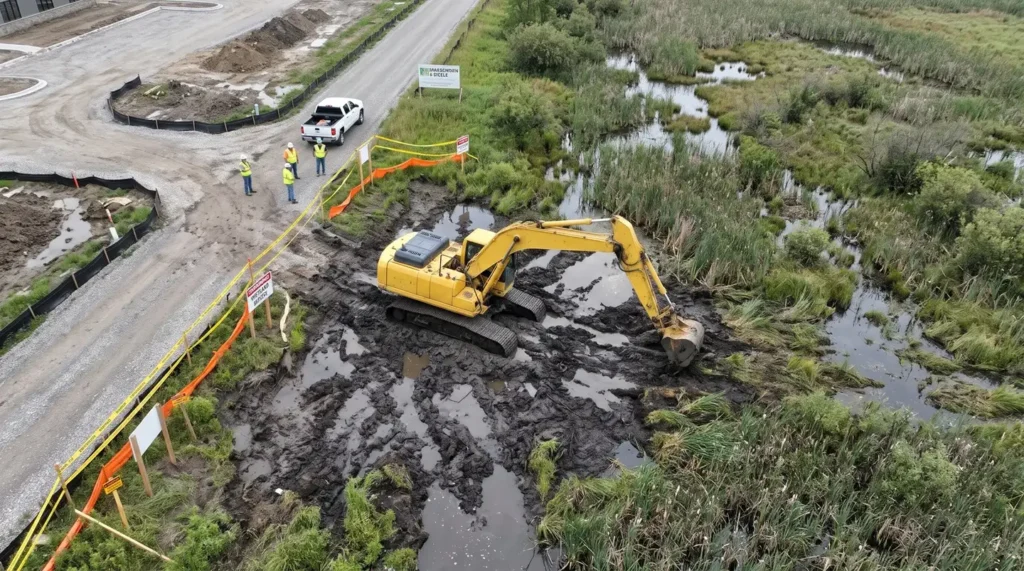
You cannot prevent stormwater runoff by building an infiltration basin in a high-water-table zone. You are mathematically trying to dig a hole in the bottom of Lake Winnebago. It fills up instantly, never drains, and leaves your premium commercial park with a permanent, stagnant swamp.
How to Actually Prevent Stormwater Runoff on Wisconsin Clay
Engineering a site that survives the next fifty years of weather means working with our civil engineering and stormwater design team from day one to read the actual topography. You must design systems that account for extreme weather swings, not just a gentle July drizzle.
When you set out to prevent stormwater runoff from destroying your site and adjoining properties, the municipality expects to see these specific elements engineered perfectly:
- Adequate Forebays: You need an engineered depression to catch heavy sediment and parking lot sand before it hits the main retention pool, or you will be paying for a massive dredging operation in three years.
- Accessible Maintenance Slopes: If you steepen the pond banks to a vertical cliff just to squeeze in two more parking stalls, the banks will erode and collapse during the first major storm.
- Emergency Overflows: When a 100-year cloudburst dumps three inches of heavy, wet slush onto frozen ground, the water has to go somewhere safely without tearing out your asphalt curbs.
- Correct Outlet Structures: Skimping on the concrete precast control structure guarantees it will clog with cattails, backing up water into your building’s foundation.
The Subterranean Pipe Dream
We see preliminary engineering packages where a developer wants to maximize retail space by routing all surface water into a subterranean chamber system buried beneath the asphalt. It sounds brilliant. You hide the water underground and save surface area.
Then winter arrives.
Nobody factors in the heavy delivery trucks parking directly above those plastic chambers during a chaotic freeze-thaw cycle in March. The subgrade turns to mush. The underground chambers crack under the dynamic load. Suddenly, your high-efficiency parking lot collapses into a sinkhole. Your retail tenant loses a month of revenue while contractors rip up the entire asphalt section to replace the failed underground system with a conventional surface basin.
Surface drainage might look ugly on an architectural rendering, but it works. You can inspect it. You can mow it. When November drops six tons of oak leaves onto your site, a public works crew can actually clean out a surface swale. Burying complex pipe systems under high-traffic commercial zones just because you are greedy for three more parking spaces is bad engineering.
Where do you put the snow?
The private plow guy always piles the snow directly on top of your flush catch basins. The snow melts during the day, freezes overnight, and your pristine parking layout becomes a liability hazard. We design infrastructure for where the snow actually goes, which is the only way to genuinely prevent stormwater runoff from turning your lot into a skating rink.
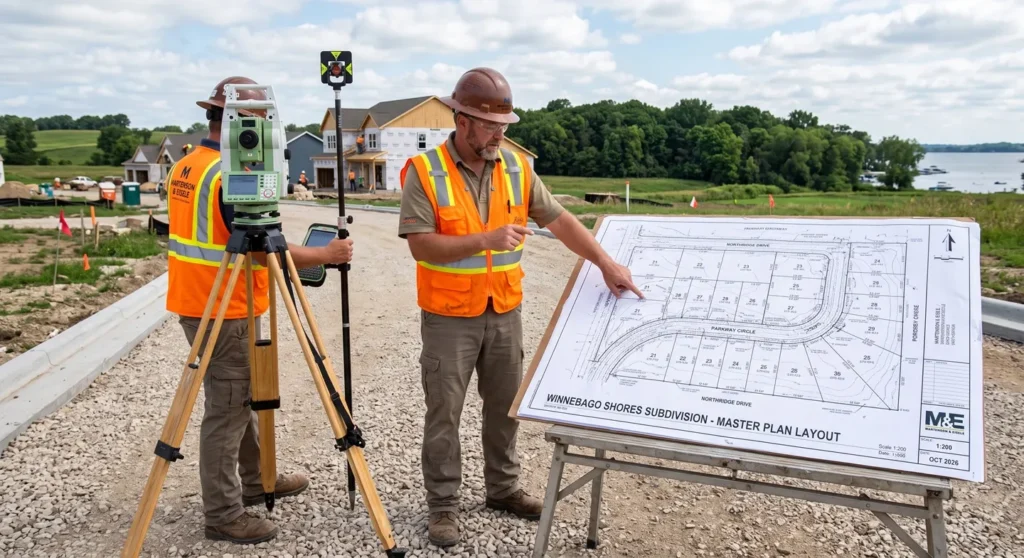
Stop fighting the site topography. Bring your raw land to Martenson & Eisele before you finalize your purchase agreement. We deploy our environmental assessment specialists to look at the soils, regional drainage patterns, and municipal ordinances with zero romanticism. We scrap the impossible ideas and design infrastructure that actually conforms to the natural landscape.
Frequently Asked Questions
What is the most effective way to prevent stormwater runoff on a commercial site?
The most effective method relies on reducing impervious surfaces where possible and using a combination of wet detention basins, strategically placed bioswales, and proper site grading to slow the water down. Slowing the water allows sediment to drop out before the runoff leaves your property limits.
Can I get an exemption from infiltration rules if my site has heavy clay?
Yes, under specific geotechnical conditions outlined in the Wisconsin Administrative Code. If soil borings prove your site has infiltration rates less than 0.6 inches per hour, or if you are dealing with shallow bedrock or high groundwater, you may qualify for an exemption from the strict infiltration requirements. However, you must still legally manage the peak discharge rate and water quality.
Why do retention ponds fail so frequently in Wisconsin?
They fail because they are under-designed and under-maintained. Developers try to shrink the footprint to save buildable land, resulting in overly steep banks that erode instantly. Furthermore, property owners fail to routinely clean out the inlet pipes and forebays, allowing sediment to completely choke out the basin’s holding capacity.